
Alcohol & Menopause
How drinking alcohol can affect your symptoms
Like it or not, alcohol is a fundamental part of our culture, particularly here in the UK. We use alcohol to celebrate, to commiserate, to relax, to revive or just as social ‘glue’.
But while we tend to think of alcohol as a ‘normal’ part of everyday life, because it is so socially accepted - we do need to remember that alcohol is a drug, and as such it can have negative effects on our health and wellbeing.
For many women, those negative effects can come become much more apparent when we reach perimenopause.
We’re not here to tell you whether to drink alcohol, or not….
This article doesn’t seek to cover much of the longer term health effects of drinking alcohol, or to give advice on whether to drink, how much to drink, or whether you should stop – all of which are very personal decisions.
But it does aim to equip you with knowledge about the effects that alcohol has on the body, understand how those effects may change during midlife and why, and give some ideas & tips about what to do if you decide to change your approach to alcohol during this time (or forever….)
Let’s start with a bit of science, on alcohol and how it affects our brain chemistry…
The relaxation effect: GABA
GABA (gamma-aminobutyric acid) is the brain’s main inhibitory neurotransmitter. Alcohol binds to the GABA receptors, which results in a feeling of relaxation.
It temporarily reduces anxiety, reduces social inhibition, and gives a feeling of mild sedation – which leaves us feeling like we can relax & switch off. But the other side of this feeling of relaxation is slower reaction times, impaired judgement, poor coordination, and a reduced memory formation.
Slowing down & Switching off: Glutamate
Alcohol also inhibits our NMDA glutamate receptors. Glutamate is our brain’s main excitatory neurotransmitter – so inhibiting it results in a feeling of calm, having a reduced response to stress, and feeling a sense of mental quiet.
BUT, glutamate is also essential for learning, memory, and neuroplasticity – which means we can experience poor memory after drinking, and even blackouts.
How the body responds
Since the body always tries to keep us in balance, there is a rebound from both of these effects….
To stay in equilibrium, the brain will try to reduce GABA sensitivity and increase Glutamate activity, all of which can result in some pretty unpleasant bounce-back effects, including:
Waking at 3am
Thoughts racing
Anxiety
Restlessness
Poor sleep
This list may sound all too familiar, and yet we don’t always learn from this experience….
Let’s do it again, anyway…!
Dopamine is our body’s reward system. When we drink alcohol, it increases dopamine release in the mesolimbic reward pathway – which results in pleasure, motivation, reward learning. Basically ‘I’d like another….’!
Dopamine isn’t pleasure in itself, but signals to the body – that was rewarding, repeat.
Sadly with repeated exposure to a stimulus, the dopamine response to a reward can reduce, which means that the alcohol cues need to become more powerful, and it becomes a habit.

The warm & fuzzy feeling of sharing a drink together
Alcohol stimulates the endogenous opioid release – basically a release of endorphins.
This results in a feeling of mild euphoria, bonding, and a reduction in emotional discomfort. And explains why alcohol can easily become such an embedded social phenomenon; the brain links alcohol with belonging and connection.
A fuel for good mood
Alcohol also boosts serotonin, which in most people will leave them feeling more sociable, and in a better mood.
But again, as our body tries to recalibrate, this disruption in serotonin may result in low mood, irritability and anxiety – and longer term, cause more on-going issues with mood regulation generally.
‘Alcohol helps me to de-stress’
In the immediate term, alcohol reduces activity in the ‘HPA axis’ – hypothalamus, pituitary, and adrenal glands. These combine to lower our perception of stress.
But repeated use can cause a rise in baseline stress activity, in cortisol, and a greater sensitivity to stress. All of which contributes to a common and recognisable cycle:
Feel Stressed – Have a Drink – Feel Temporarily Better – Rebound Stress – Stronger Desire to Drink
Why not try a nightcap?
Initially, alcohol makes it easier to fall asleep - but not to stay asleep, or experience a restful night. The rebound of Glutamate & nervous system activity results in fragmented sleep, more frequent waking, a reduction in REM Sleep. It is a sedative, not a sleep aid – it helps us to lose consciousness, but not to feel refreshed and revived by it.
The combination of the effect on our anxiety and sleep results in an experience familiar to many menopausal women; awake at 3am, feeling wide awake, restless, anxious, or all three.
It’s easy to see how this can quickly become a negative cycle:
Poor sleep → feeling tired and irritable → reaching for a drink to relax → disrupted sleep → increased anxiety and tiredness the next day
What about our brain health?
Over time, chronic exposure to alcohol won’t just temporarily impact our brain chemistry, it will actually change the structure of our brains – reducing the volume of grey matter and changing white matter. It increases inflammation and reduces neuroplasticity (our brain’s ability to reorganise and adapt its structure and neural connections.
So that’s how alcohol works on our brain chemistry – but why do we notice this so much more once we reach perimenopause?
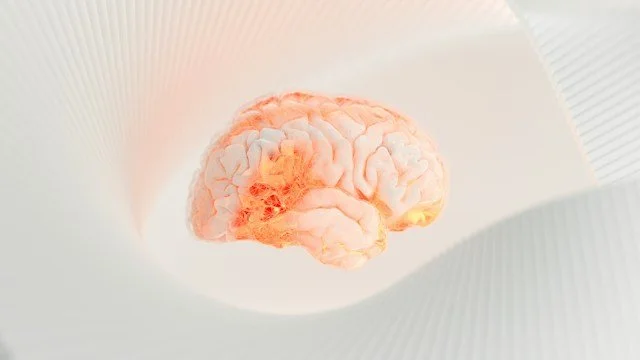
Why does alcohol make my menopausal symptoms feel so much worse?
Hot flushes, night sweats, disrupted sleep, anxiety palpitations and mood changes can all happen during menopause without alcohol being involved. But when alcohol is added into the mix, some women find that they become much more noticeable.
It’s a bit like having lots of tabs open on your computer. Your body is already managing a huge amount of change, and adding another stressor, in the form of the alcohol ‘drug’ can just make it harder for it to cope with everything at once.
There are also knock-on effects that contribute too.
If you sleep badly after drinking, you may be more tired the next day. When you’re tired, exercise can feel harder, making it more tempting to stay on the sofa. Making nutritious food choices can also feel more difficult. You may then feel less well overall – and perhaps reach for another drink because you are looking for something to help you relax.
This isn’t to say you have a lack of willpower, it’s just a practical consequence of how different factors interact.
Why does one glass suddenly feel like three?
Many women report that their alcohol tolerance changes during perimenopause and menopause. You may find that an amount you tolerated quite comfortably in your 20’s and 30’s, now seems to have a much greater effect.
There can be a number of reasons for this.
A slower metabolism in midlife means that alcohol stays in your system for longer
A decrease in lean muscle mass, and increased body fat reduces your ability to distribute your alcohol effectively; water dissolves in body water, and muscle holds more water than fat – so this change in ratio results in a higher blood alcohol concentration from the same amount of drink.
As oestrogen decreases, your central nervous system reacts more sensitively to alcohol.
Does this mean I have to stop drinking?
There is no single answer to this.
Some women decide they feel significantly better without alcohol and choose to stop completely. Others decide to reduce how much they drink or how often they drink. Others continue to enjoy alcohol but become generally much more deliberate about what, when, and how much they have.
The important thing is having enough information to make the right decision for you. As well as understanding the science of alcohol’s effects, a good way to gather information is to simply experiment.
You could take a break from alcohol for a few days, weeks or months, and just notice what happens to your:
Sleep
Anxiety
Hot flushes & night sweats
Energy levels
Mood
Headaches
General sense of wellbeing.
You may be surprised by what you notice!
Equally, you may decide that you enjoy having an occasional drink, and that, for you, the enjoyment of doing so outweighs the negatives. That’s your decision too.
If you do want to drink, some forward planning can help to reduce the negative effects..
If you don’t want to stop drinking completely, but want to minimise the negative effects, then there are some good ways to do this – including ways to make sure you don’t get carried away!
Eat before drinking
Drinking at a party or social event without eating can make the effects (including the negative ones) feel much stronger. Having eaten beforehand can make you feel more prepared, and minimise the negatives.
Alternate alcohol & alcohol-free drinks
Having water or a soft drink between alcoholic drinks can help you to slow things down. There are so many alcohol-free options available now, including beers, wine & spirits, that you don’t have to feel you are missing out (or experience the peer pressure that drinking can sometimes create)
Give yourself permission to leave
Sometimes drinking isn’t actually about really wanting another drink, it’s about staying in a social situation longer than you actually want to. If you’re no longer enjoying yourself, it’s OK to leave! You shouldn’t need to justify your decision, but having a ready ‘I’m driving’, ‘I’ve got an early start’, or ‘I need to be home for a babysitter’ can make the departure easier.
Listen to your body
Perhaps the most useful thing we can learn in midlife is to listen to what our bodies are telling us.
If you consistently realise that a particular drink makes your hot flushes worse, disrupts your sleep, or leaves you feeling anxious the following day, that is useful information. Many women find that some drinks affect them more than others – wine & champagne are often cited as triggers, but everyone’s experience is different.
Rather than assuming that there is one universal rule, notice what happens for you.
The bottom line…
If you suddenly find that alcohol doesn’t agree with you in the way it once did, you’re not alone. A change in tolerance is something that many women experience in this stage of life.
Whether you choose to stop drinking, cut down, take an occasional break or continue to enjoy alcohol moderately is entirely personal. There is no prize for being perfect! But if you’re struggling with symptoms, reducing your alcohol intake may be one experiment that might be worth trying.
What matters most is understanding why the effects happen, listening to your body and making conscious choices rather than feeling that you have to follow someone else’s rules.
All images free for commercial use, courtesy of Unsplash October 2026
