

Bone Mineral Density Scan (DEXA)
Information for existing Clinic51 menopause patients
Bone Mineral Density (DEXA) Scan
Bone Mineral Density (BMD) is a measure of how strong our bones are.
We reach peak bone density at around 30, after that we lose approx 5% of our bone density a decade - but for women this accelerates after menopause, when we can lose up to 30% in the first 10 years.
This is important as it is silent and often the first time we know there is an issue is when we fracture a bone; we might trip in the garden and break a hip, or fracture our spine just from the weight of gravity.
These type of fractures hugely impact quality of life, the ability to be independent as well as significantly shortening lifespan. 30% of women die within a year of fracturing their hip and of those who survive, 80% will still be dependent on care one year on.
This is preventable. If we know our baseline at midlife, we know our risk and can take proactive action.
If you already know you have an issue with your bone density e.g.osteopenia/osteoporosis it is recommended that you have a repeat BMD DEXA every 2-5 years. Your clinician can advise you of the most appropriate interval.
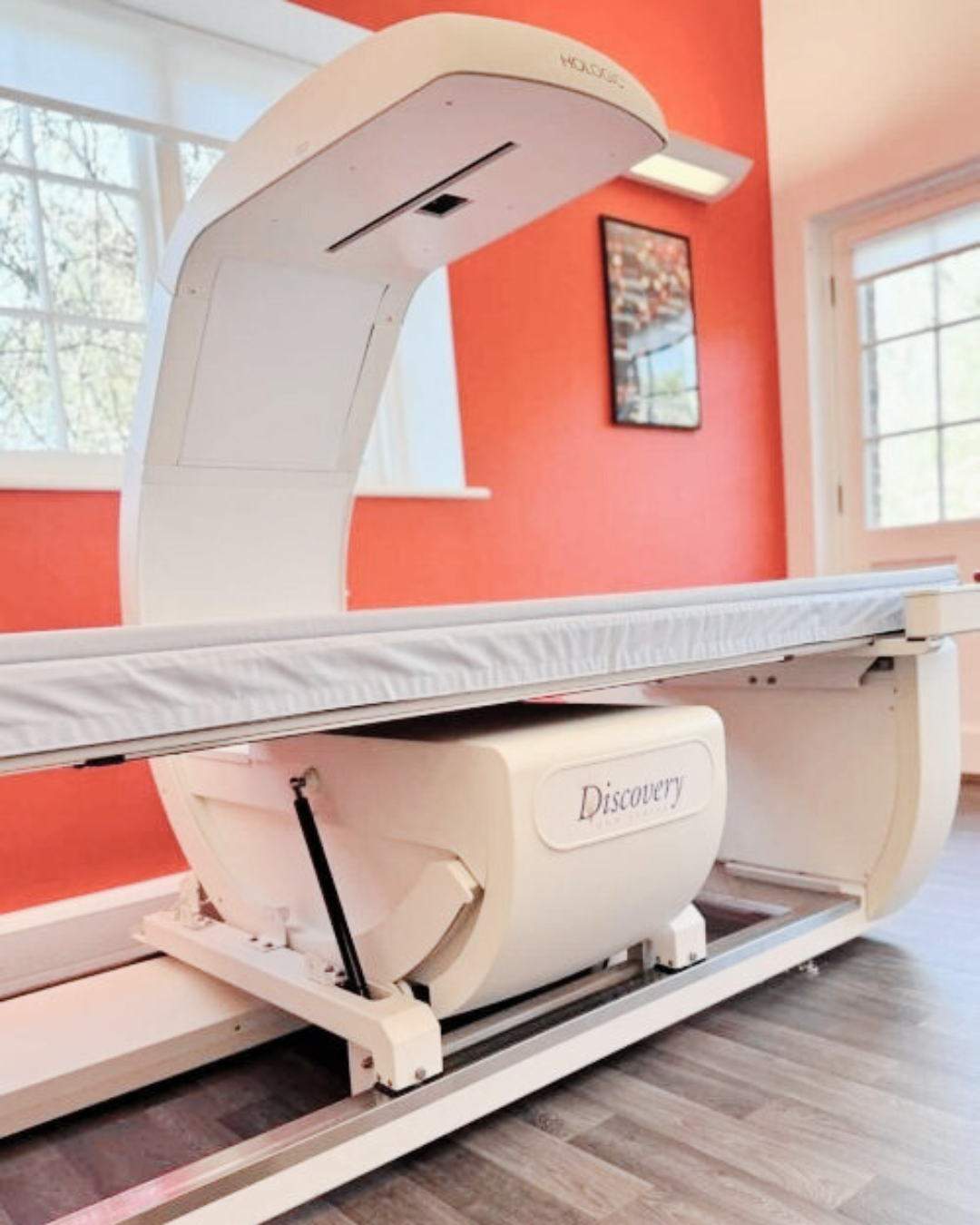
Our DEXA provider: i-Thrive
We work with iThrive who are based in Puttenham, near Farnham, to offer high quality BMD DEXA. Scroll down to the bottom of the page for a map and directions
Scans cost £189 and are booked directly through us. Please contact our reception team (click the button below), or give us a call.
The results will be sent to you and your Clinic51 doctor, they will discuss them with you at your next follow up or you can request an additional follow up if you would like to discuss them sooner.
Frequently Asked Questions
-
Allow an hour in total for your appointment, although the actual scan time is much shorter than this.
-
Wear comfortable, tight fitting clothing, without metal (eg no zippers or underwire bras), you will be asked to remove jewellery, belts and metal objects.
Avoid calcium supplements for 24 hours prior to the scan.
Correct positioning is key so expect to be moved by the technician.
The scanner is completely open so non claustrophobic.
-
DEXA scans are extremely safe and use very low levels of radiation. The amount of radiation exposure from a body composition scan is about the same as what you would receive on a 1–2 hour flight, or from a single day of natural background radiation on Earth.
A typical dental x-ray exposes you to about 5-10 times more radiation than a DEXA scan.
-
DEXA scanners do not use magnetic fields so they do not interfere with pacemakers. However, it is best to inform i-Thrive if you have one in advance of the scan.
Metal implants (like a hip/knee replacement, etc.) will show up as dense bone on your scan but they will not affect the data (if you have bilateral hip replacement please let i-Thrive know in advance)
-
The weight limit for the i-Thrive model of scanner is 400 lbs (180 kg).
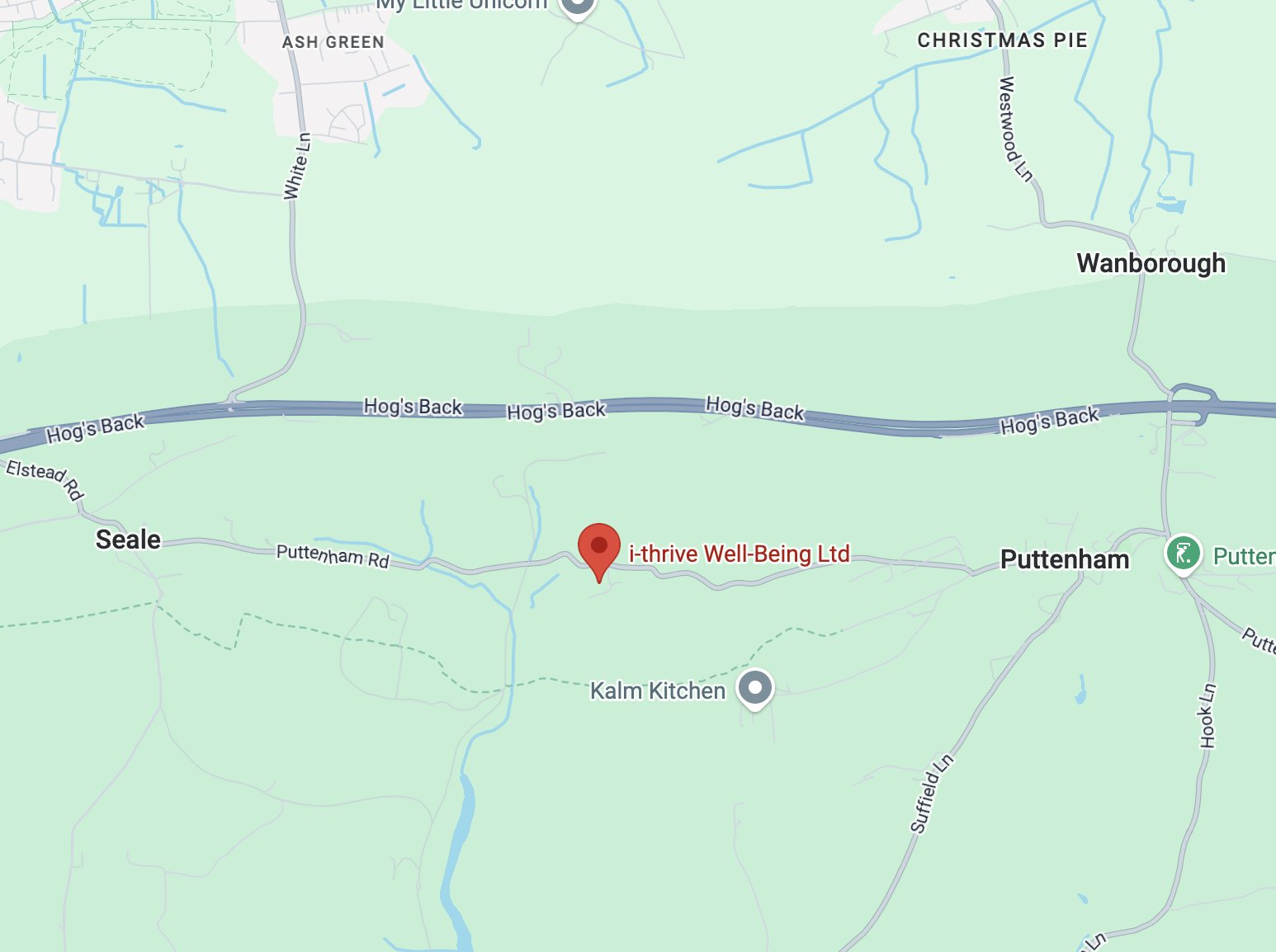
Location
i-Thrive can be found at:
Dairy North, Shoelands Farm
Seale Lane
Puttenham, Farnham
Surrey, GU10 1HL
United Kingdom
What/3/Words: Limits.Health.Media
